West Hartford Home Inspection Costs
and What a $900K+ Inspection Should Cover

Quick Answer
- For a larger home, a core Connecticut inspection runs about $672 for 3,000 square feet and $812 for 4,000 (Houzeo, updated October 14, 2026). West Hartford's reported typical range of $220 to $496 (Homeyou, October 27, 2026) describes smaller homes, so a $900K+ buyer should budget at the larger-home end and get a written quote.
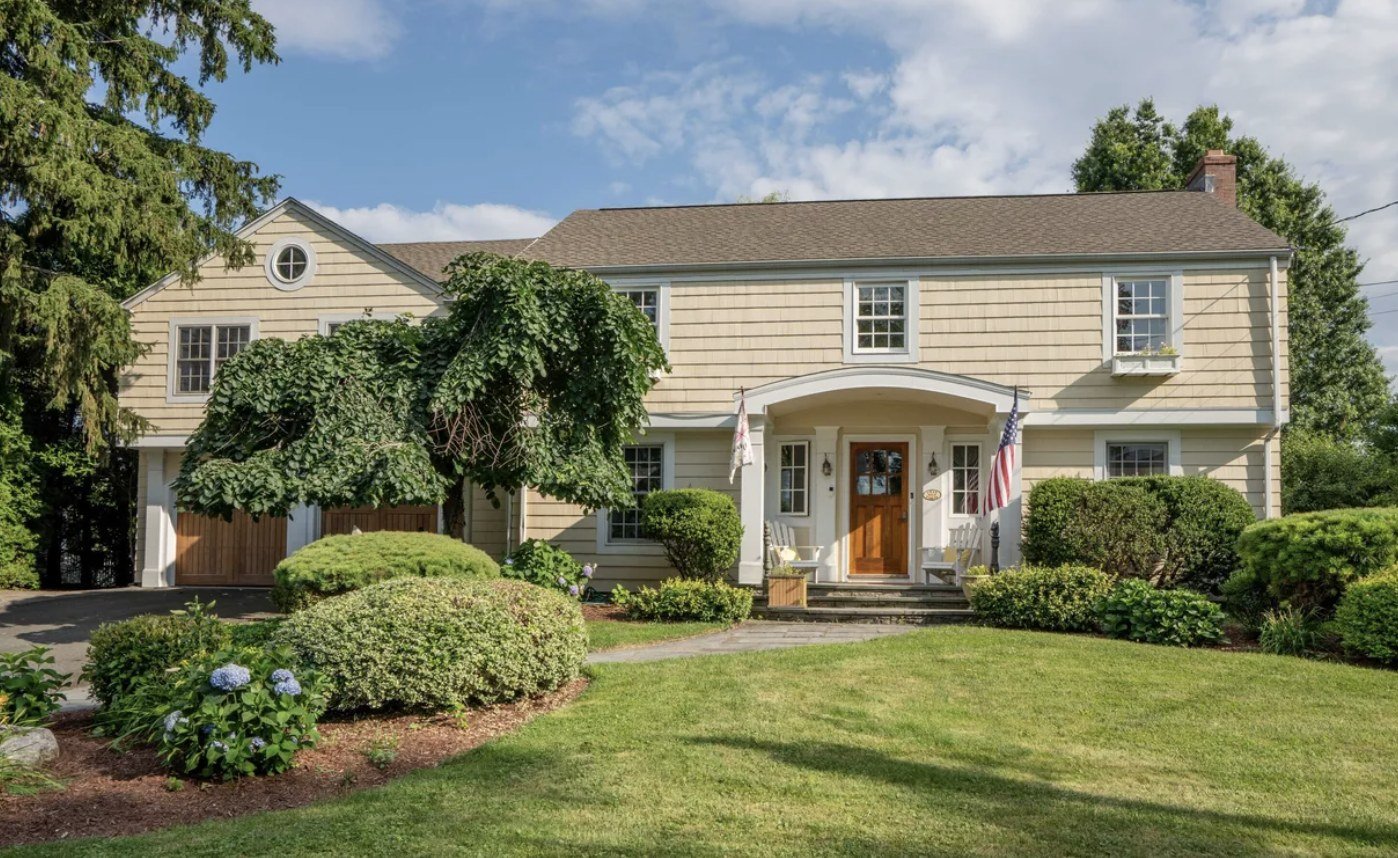
- Add-on tests are separate line items: radon, wood-destroying insects, a sewer line scope and a chimney inspection. Using the published ranges, a core inspection plus radon and insects comes to $997 to $1,606, and adding the sewer scope and chimney brings the range to $1,517 to $3,940. On a $1,225,000 purchase, like the home pictured, that is roughly 0.08% to 0.32% of the price.
- Connecticut does not require a buyer's inspection, but your contract sets the clock. The Greater Hartford REALTORS contract amendment refers to an inspection contingency date and a 5-day negotiation period, and it allows extensions for radon, lead, insects, asbestos, septic and well work. Book specialists the same week as the inspector.
- At this price, the inspection is less about the checklist than about size and age: multiple heating zones, additions and renovations, finished basements, chimneys and the sewer line. Ask the inspector for a sample report and a written scope before you hire.
A buyer at $900,000 or more is committing to a house with more systems, more square footage and usually more history than the typical listing. The inspection is the one step where you pay a small fraction of the price to learn what you are buying, and it is also the step where buyers most often look for the cheapest quote.
Published cost figures for Connecticut vary widely, because they measure different homes and different scopes. This guide puts the numbers side by side, shows what to add for a larger or older house, explains how the inspection fits the contract timeline, and lists what the inspection should cover. It is informational and is not legal or financial advice, and the prices are published ranges rather than quotes.
What Inspections Cost
| Source and date | Geography | Published figure |
|---|---|---|
| Houzeo, citing Home Inspection Insider (updated Oct 14, 2026) | Connecticut | Average range $392 to $532; $532 at 2,000 sq ft, $602 at 2,500, $672 at 3,000, $812 at 4,000 |
| Homeyou, reported by customers (updated Oct 27, 2026) | West Hartford | Typical range $220 to $496; larger homes $350 or more |
| Redfin, quoting Mark's Inspections (Sept 8, 2023) | Connecticut | Single-family homes $600 to $700 on average; thousands for larger or more complex properties |
| Rocket Mortgage, HomeAdvisor data (updated Aug 6, 2026) | National | Average $343; $300 to $500 for 2,500 to 3,000 sq ft; New York and Philadelphia $450 |
Sources are linked below. The figures come from different samples and methods, and the Homeyou page does not explain its methodology. Treat them as a range, not a price.
The spread is the point. The West Hartford figure and the national average describe typical homes, while the Houzeo figures scale with size. A 3,500-square-foot house at $1,000,000 or more sits at the top of any of these tables, and Redfin's Connecticut guide notes that fees can reach thousands for larger or more complex properties. Ask each inspector for a quote based on square footage, age and the number of systems, and ask whether detached garages, outbuildings and a second heating system are included.
Add-On Tests: What Each Costs and When You Need It
| Test | Published range | When it makes sense |
|---|---|---|
| Radon | $250 to $419 | Nearly every purchase; the Connecticut DPH radon program covers testing and next steps |
| Wood-destroying insects | $75 to $375 | Most purchases, especially older wood-frame homes; the Greater Hartford contract amendment lists it as its own inspection |
| Sewer line camera scope | $270 to $1,734 | Older homes and large mature trees near the line; the range is wide, so get quotes |
| Chimney, Level 2 | $250 to $600 | Any home with a working fireplace or wood stove; HomeGuide recommends a Level 2 assessment when buying a home with a chimney |
| Lead paint | $300 to $700 | Homes built before 1978, which have federal disclosure rules |
| Mold | $600 to $700 | Only when the inspector or you see moisture or staining |
| Foundation or structural review | $300 to $750 | When the inspector flags cracking, movement or an unusual addition |
| Pool, septic or well | Pool $200 to $500; septic $200 to $900 | Only if the property has them; the contract amendment names septic and well |
Sources: Houzeo (citing Angi), Rocket Mortgage (HomeAdvisor data) and HomeGuide (undated); links below. Ranges are national or mixed and are not West Hartford quotes.
A realistic budget
| Scenario | Low | High | Share of a $1,225,000 price |
|---|---|---|---|
| Core inspection (3,000 to 4,000 sq ft), radon, wood-destroying insects | $997 | $1,606 | 0.08% to 0.13% |
| Plus sewer scope and chimney Level 2 | $1,517 | $3,940 | 0.12% to 0.32% |
Calculation: low = $672 + $250 + $75, plus $270 and $250 for the second row; high = $812 + $419 + $375, plus $1,734 and $600. The $1,225,000 price is the sale price of the home in the photo above. Most buyers will not need every line, and a real quote can differ.
Inspection fees are usually due at the time of the inspection, so plan the cash ahead of closing, alongside the appraisal. If you are financing, ask your lender what to expect before closing. I recommend Jonathan Esposito of Atomic Mortgage (NMLS #2069701; jonathan@atomicmtg.com; (860) 614-2898), and you are free to compare other lenders.
What a $900K+ Inspection Should Cover
Every inspection covers the structure, roof, exterior, electrical, plumbing, heating and cooling, insulation and interior. At this price level, the questions to add are about scale and history. Ask the inspector to put the scope in writing, and compare it with this table.
| Area | What to expect at $900K+ | What to ask |
|---|---|---|
| Heating and cooling | Several zones, a boiler and central air, or mini-splits added later | Is every zone tested? How old is each unit, and are service records available? |
| Roof, gutters and chimney | Complex rooflines, multiple chimneys, older slate or cedar | Is the roof walked, and is a Level 2 chimney inspection recommended? |
| Basement and foundation | Finished space that can hide moisture; older stone or block walls | Where are the moisture readings, and is anything behind finished walls? |
| Additions and renovations | Work done over several owners, sometimes without clear records | Which parts are original? Ask the seller for permits for each addition |
| Electrical | Large panels, subpanels, old wiring in older homes | Is the panel brand and age noted, and is old wiring present? |
| Plumbing and water heating | Multiple baths and water heaters; supply pipe material varies with age | What are the supply and drain materials, and how old is each heater? |
| Sewer line and drainage | An older lateral and mature trees, if the home is on public sewer | Is a camera scope recommended? Confirm who owns each segment of the line |
| Attic, insulation and ventilation | More surface area to lose heat; older homes may have vermiculite | What insulation is present? See the colonial inspection guide for older homes |
| Radon, insects, lead | Separate tests, usually ordered with the inspection | Which are included in the fee, and which are quoted separately? |
Ask for a sample report before you hire. A useful report has photographs, sorts findings by urgency and names which items need a specialist, instead of a long list of minor defects. You should also attend the inspection. Seeing the main shutoffs, the panel and the equipment with the inspector is worth more than any summary page.
How Connecticut and West Hartford Frame the Inspection
The inspection is a buyer's choice. Redfin's Connecticut guide states that a home inspection is not legally required in the state, though it calls it an essential step. Connecticut licenses home inspectors through the Department of Consumer Protection, which oversees a Home Inspection Licensing Board, so confirm the license of anyone you hire at the DCP home inspector page.
The inspection is not the seller's condition report. In most sales, a Connecticut seller must give the buyer a residential condition report, or a $500 credit at closing, under Chapter 392 of the Connecticut General Statutes. That report is the seller's own statement of what they know, not an independent inspection.
Permits are a separate check. West Hartford's Building Department issues permits for alterations, additions, HVAC, electrical and plumbing work, and publishes monthly permit reports and public documents. If the house has an addition or a renovated kitchen, ask the seller for the permits and call the Building Department at 860-561-7530 to ask how to confirm them.
Ask who owns the sewer line. If the home is on public sewer, the Metropolitan District (MDC) publishes a sewer service connection manual. It describes the connection from the main to the street line and from the street line to the building, and treats building plumbing as beginning 3 to 5 feet outside the foundation, but it does not say in one place who owns each stretch. Ask the MDC Utility Services Department where responsibility ends for your address before you rely on a scope result.
Fit the Inspection to the Contract Clock
The Greater Hartford Association of REALTORS' contract amendment, Form K-1 (revised September 2025), shows how inspection timing works in a typical local contract. It refers to an Inspection Contingency Date set in the purchase contract and a 5-day period for the parties to agree on terms, or for the buyer to terminate, which runs from that date. The form lets the parties extend the contingency date for home, lead, termite or wood-destroying insect, asbestos, radon and urea formaldehyde foam insulation inspections, and extend the completion date for septic and well work.
The practical lesson is to order everything at once. Schedule the general inspector, radon and insect inspections in the same week, and decide with your attorney and agent whether to ask for an extension before the contingency date, not after it. The form does not say who pays for any inspection, and your own contract controls, so have your attorney review it.
After the Report: A Five-Step Response
- Sort the findings. Separate safety, structure and water from cosmetic items. At $900K+, the defects that matter are rarely the long list at the back of the report.
- Get specialist opinions early. If the inspector flags a roof, chimney, foundation or sewer concern, book the specialist before the contingency date, not after it.
- Price what you can. Ask for written estimates, and ask your attorney whether a repair, credit or price reduction fits the problem.
- Use the negotiation period. The 5-day period in the Greater Hartford form is short, so send one organized request, not a series of small ones.
- Decide with the whole picture. Compare the cost of the repairs with your offer, the winter or spring timing, and the property tax, as covered in the revaluation guide. If the problems are larger than you want to carry, the termination right exists for that reason.
For a purchase in the colder months, see the winter buying guide for what snow and cold limit. For a new build, the new construction guide covers staged inspections.
The Bottom Line
Budget about $1,000 to $1,600 for a core inspection with radon and insects on a larger home, and up to roughly $3,900 if you add a sewer scope and chimney inspection. That is a fraction of one percent of a $1,225,000 purchase, and it is the cheapest information you will buy.
Hire for scope, not for the lowest quote. Get the scope in writing, ask for a sample report, order specialists the same week, and respect the contingency dates in your contract.
Buying a West Hartford home at $900K or more? I can help you line up the inspection timeline with your contract, decide which add-on tests fit the house, and review the report with you before the negotiation period starts.
How much does a home inspection cost in West Hartford?
Published figures vary. Homeyou reports a typical West Hartford range of $220 to $496, while Houzeo's Connecticut figures scale with size, from $532 at 2,000 square feet to $672 at 3,000 and $812 at 4,000. For a larger home at $900K or more, plan on the larger-home end, plus add-on tests such as radon, wood-destroying insects, a sewer scope and a chimney inspection, and get a written quote.
Is a home inspection required in Connecticut?
No. Redfin's Connecticut guide states that a buyer's home inspection is not legally required, though it describes the inspection as an essential step. Connecticut does license home inspectors through the Department of Consumer Protection, so confirm the license of anyone you hire.
What extra inspections should I get on a $900K+ home?
Most buyers should consider radon and wood-destroying insect inspections, a chimney Level 2 inspection if there is a fireplace, and a sewer camera scope on an older home. Lead testing applies to pre-1978 homes, and mold, foundation or pool inspections apply only when the property shows a reason. Published ranges are in the tables above.
How long do I have to complete the inspection?
The deadline is the inspection contingency date in your purchase contract. The Greater Hartford REALTORS contract amendment shows a 5-day period after that date to agree on terms or terminate, and allows extensions for radon, lead, insect, asbestos, septic and well inspections. Your own contract controls, so have your attorney confirm the dates.
Is the seller's condition report the same as an inspection?
No. In most sales, a Connecticut seller must give the buyer a residential condition report or a $500 credit at closing under Chapter 392 of the General Statutes. The report is the seller's own statement of what they know, not an independent inspection, so a buyer should still arrange one.
Sources: Houzeo, home inspection cost in Connecticut (updated October 14, 2026). Homeyou, West Hartford inspection costs (October 27, 2026). Redfin, home inspections in Connecticut (September 8, 2023). Rocket Mortgage, home inspection cost (August 6, 2026). HomeGuide, chimney inspection cost (undated). Greater Hartford Association of REALTORS, Form K-1 contract amendment (rev. 9/25). Connecticut General Statutes §20-490a. Connecticut DCP, Home Inspector. Connecticut General Statutes Chapter 392. Connecticut DPH Radon Program. Town of West Hartford, Building Department (accessed November 5, 2026). The MDC, Sewer Service Connection Manual (January 2017). Prices are published ranges for the dates stated, not quotes. Not legal or financial advice.