Capital Gains Tax on Selling
Your West Hartford Home in 2026

Quick Answer
- Most West Hartford sellers can exclude up to $250,000 of gain (single) or $500,000 (married filing jointly) from federal capital gains tax under IRC Section 121, provided they owned and lived in the home for at least 2 of the last 5 years.
- Above that exclusion, gain is taxed at federal long-term capital gains rates of 15% or 20% for most West Hartford sellers, plus Connecticut taxes the same gain as ordinary income at rates up to 6.99% — Connecticut has no separate, lower capital gains rate the way the federal system does.
- Capital gains tax is entirely separate from Connecticut's real estate conveyance tax, a transfer tax on the full sale price (not the profit) that runs roughly 1.0%–1.3% for most West Hartford sales, due at closing regardless of whether you owe any capital gains tax at all.
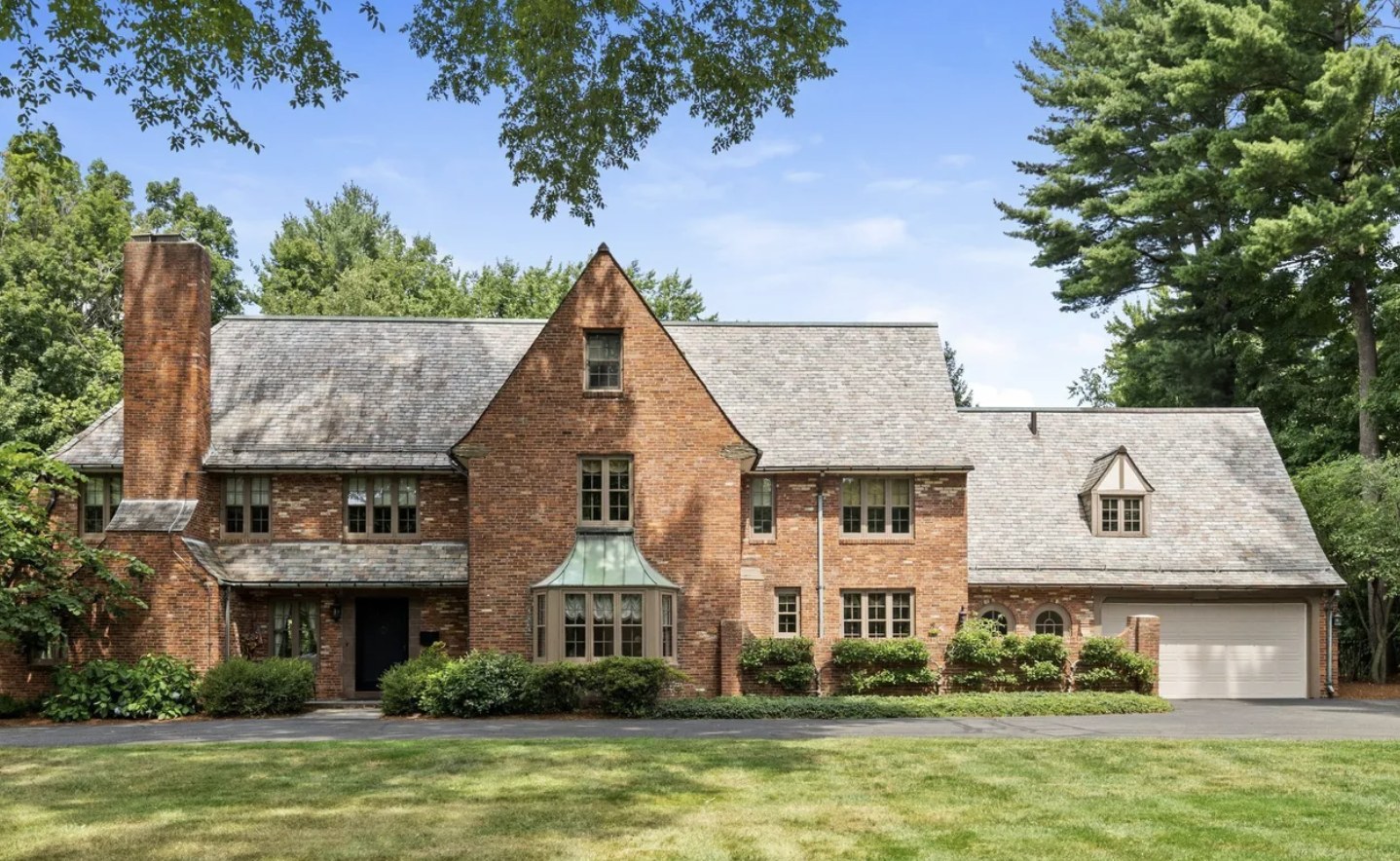
Home price appreciation across West Hartford's stronger neighborhoods has been strong enough, for long enough, that a growing number of sellers here are running into a tax question their parents' generation rarely faced: what happens when your gain is bigger than the exclusion? A home bought for $450,000 fifteen years ago and sold today for $1.3 million in King Philip or Bishop's Corner can easily produce a gain well past the $250,000 or $500,000 the IRS lets you exclude tax-free — and Connecticut layers its own rules on top of the federal picture.
This guide walks through exactly how the math works for a West Hartford seller in 2026: what the federal exclusion actually covers, how Connecticut taxes the leftover gain, how the state's separate conveyance tax fits in, and where the real planning opportunities are before you list.
None of this is a substitute for advice from a CPA or tax attorney who knows your specific numbers — it's the framework to bring to that conversation already understanding the moving parts.
Two Separate Taxes, Often Confused
| Capital Gains Tax | Connecticut Conveyance Tax | |
|---|---|---|
| What it taxes | Your profit (gain) on the sale | The full sale price, regardless of profit |
| Who collects it | IRS (federal) & CT DRS (state income tax) | State of Connecticut & the Town of West Hartford |
| Can it be zero? | Yes — often fully excluded under Section 121 | No — owed on every sale over $2,000 |
| Typical West Hartford impact | $0 for most sellers under the exclusion; meaningful above it | Roughly 1.0%–1.3% of sale price |
The Section 121 Exclusion: Your First $250K or $500K Is Usually Free
Under IRC Section 121, most homeowners can exclude a substantial slice of their gain from federal income tax entirely — no reinvestment required, no replacement home to buy. The exclusion is $250,000 for single filers and $500,000 for married couples filing jointly, and it has not been adjusted for inflation since it was enacted in 1997.
To qualify, you generally need to have owned and lived in the home as your primary residence for at least 24 months out of the 5 years before the sale. The two tests don't need to overlap perfectly, and for married couples filing jointly, only one spouse needs to meet the ownership test, though both must meet the use test.
Critically, the exclusion applies to gain, not sale price. Gain is calculated as your net sale proceeds minus your adjusted cost basis — your original purchase price, plus qualifying capital improvements over the years (a new roof, a kitchen renovation, an addition), minus any depreciation claimed if part of the home was ever used as a rental or home office. Keeping receipts and records of major improvements over your ownership is one of the simplest ways to reduce a future tax bill.
Where West Hartford Sellers Actually Exceed the Exclusion
The exclusion covers most sellers completely. It starts to matter once a home's appreciation, on top of a couple's combined exclusion, pushes gain past $500,000 — a real possibility for long-held homes in King Philip, Bishop's Corner, and South West Hartford, where price growth over a decade-plus of ownership has been substantial. See the 2026 market report for current price trend data driving this dynamic.
Illustrative Example
A married couple bought a King Philip colonial years ago for $450,000 and invested $100,000 in qualifying improvements over their ownership, bringing their adjusted basis to $550,000. They sell today for $1,300,000, with roughly $65,000 in selling costs (commissions, closing costs), leaving net proceeds of $1,235,000.
| Step | Amount |
|---|---|
| Net Sale Proceeds | $1,235,000 |
| Adjusted Cost Basis | $550,000 |
| Total Gain | $685,000 |
| Section 121 Exclusion (MFJ) | –$500,000 |
| Taxable Gain Remaining | $185,000 |
| Est. Federal LTCG Tax (15%) | $27,750 |
| Est. NIIT (3.8%) | $7,030 |
| Est. Connecticut Income Tax (6.99%) | $12,932 |
| Estimated Total Tax on the Sale | ~$47,712 |
Illustrative only, using 2026 federal brackets and assuming this household's income places the taxable gain in the 15% federal bracket and Connecticut's top marginal rate. Actual results depend on total household income, filing status, and specific deductions. Confirm your own numbers with a CPA before listing.
Federal Long-Term Capital Gains Rates for 2026
Gain above your exclusion is taxed as a long-term capital gain (assuming you owned the home more than a year) at 0%, 15%, or 20%, based on your total taxable income for the year, under IRS Rev. Proc. 2025-32:
| Rate | Single | Married Filing Jointly |
|---|---|---|
| 0% | Up to $49,450 | Up to $98,900 |
| 15% | $49,451–$545,500 | $98,901–$613,700 |
| 20% | Over $545,500 | Over $613,700 |
Most West Hartford sellers with a taxable home-sale gain land in the 15% or 20% bracket, since the gain itself stacks on top of the rest of the household's taxable income for the year.
The Net Investment Income Tax (NIIT): The Surtax Many Sellers Miss
On top of the standard capital gains rate, a 3.8% Net Investment Income Tax applies to the lesser of your net investment income or the amount your modified adjusted gross income (MAGI) exceeds $200,000 (single) or $250,000 (married filing jointly). For a household already earning well into six figures before the home sale — common among West Hartford's higher-value sellers — the NIIT often applies to the entire taxable portion of the gain, not just a fraction of it.
Connecticut Taxes the Gain Too — At Ordinary Income Rates
This is the detail that catches sellers off guard: unlike the federal system, Connecticut does not offer a preferential rate for capital gains. The state simply adds your taxable gain to your other income and taxes the total under Connecticut's ordinary income tax brackets, which top out at 6.99%. There's no 0/15/20% structure at the state level — every dollar of taxable gain that survives your federal exclusion is taxed by Connecticut at your marginal state rate.
The Conveyance Tax: A Separate Bill Due at Closing
Regardless of whether you owe any capital gains tax at all, Connecticut charges a real estate conveyance tax on the full sale price of the home, paid by the seller at closing. It has two parts: a tiered state tax and a flat municipal tax. West Hartford uses the standard municipal rate — it is not one of the higher-rate "targeted investment communities" like Hartford or New Britain.
| Portion of Sale Price | State Rate |
|---|---|
| Up to $800,000 | 0.75% |
| $800,001 – $2,500,000 | 1.25% |
| Above $2,500,000 | 2.25% |
West Hartford's municipal conveyance tax adds a flat 0.25% of the full sale price on top of the state tax. Here's how the combined bill looks at a few West Hartford-relevant price points:
| Sale Price | State Tax | Municipal Tax (0.25%) | Total Conveyance Tax |
|---|---|---|---|
| $900,000 | $7,250 | $2,250 | $9,500 (1.06%) |
| $945,000 (King Philip median) | $7,813 | $2,363 | $10,175 (1.08%) |
| $1,500,000 | $14,750 | $3,750 | $18,500 (1.23%) |
| $2,000,000 | $21,000 | $5,000 | $26,000 (1.30%) |
Sources: Connecticut conveyance tax rates and calculation methodology. Confirm exact figures with your closing attorney.
Sellers of homes above $2.5 million should also ask their attorney about Connecticut's real estate conveyance tax credit, which can offset some of the top 2.25% tier against state income tax liability in certain circumstances.
Partial Exclusion: When You Don't Meet the Full 2-Year Test
Selling before hitting the 2-year ownership and use mark doesn't automatically forfeit the exclusion. The IRS allows a partial, prorated exclusion for sales driven by a change in employment location, a health-related move, or other unforeseen circumstances specifically defined by the IRS — a relevant consideration for West Hartford sellers relocating for a new job or family need sooner than planned.
What This Means for West Hartford Sellers
- Track your improvements. A well-documented adjusted basis is the single biggest lever you control before a sale — every qualifying dollar of capital improvement reduces taxable gain dollar for dollar.
- Time the sale around your income year if you can. Since Connecticut and the NIIT both key off your total annual income, a seller with unusual flexibility on closing date may have a modest opportunity to manage which tax year absorbs the gain.
- Budget for the conveyance tax separately from any capital gains liability. It's due at closing regardless of your tax outcome, and sellers who only plan around capital gains sometimes forget to net it out of their proceeds.
- Loop in a CPA before you list, not after you close. Basis calculations, partial exclusions, and NIIT interact in ways that are far easier to plan around before a sale than to fix afterward.
The Bottom Line
Most West Hartford sellers owe little or no federal capital gains tax thanks to the $250K/$500K Section 121 exclusion — but long-held homes in the town's strongest-appreciating neighborhoods can exceed it.
Connecticut taxes any leftover gain as ordinary income, with no capital-gains discount at the state level, and every seller owes the separate conveyance tax regardless of profit.
Thinking about selling and want to understand your specific numbers before you list?
How much of my home sale profit is tax-free in 2026?
Up to $250,000 if you're single, or $500,000 if married filing jointly, under the federal Section 121 exclusion — provided you owned and used the home as your primary residence for at least 2 of the last 5 years. Gain above that amount is taxable.
Does Connecticut have its own capital gains tax rate?
No. Connecticut taxes capital gains as ordinary income under its regular state income tax brackets, which top out at 6.99%, rather than offering the reduced 0/15/20% rate structure the federal government uses for long-term gains.
Is the Connecticut conveyance tax the same as capital gains tax?
No, they're entirely separate. The conveyance tax is a transfer tax on the full sale price, owed at closing regardless of profit. Capital gains tax applies only to your actual gain, and is frequently reduced to zero by the Section 121 exclusion.
What is the Net Investment Income Tax and does it apply to home sales?
The NIIT is an additional 3.8% federal tax that applies to the lesser of your net investment income or the amount your modified adjusted gross income exceeds $200,000 (single) or $250,000 (married filing jointly). Taxable gain from a home sale — the portion left after the Section 121 exclusion — counts as investment income for this purpose.
Can I avoid capital gains tax by buying another home?
Not under current law for a primary residence. The old rule allowing gain deferral by purchasing a replacement home was repealed in 1997 and replaced by the Section 121 exclusion. A 1031 exchange, which does allow gain deferral through reinvestment, applies only to investment or business property — not a primary residence.