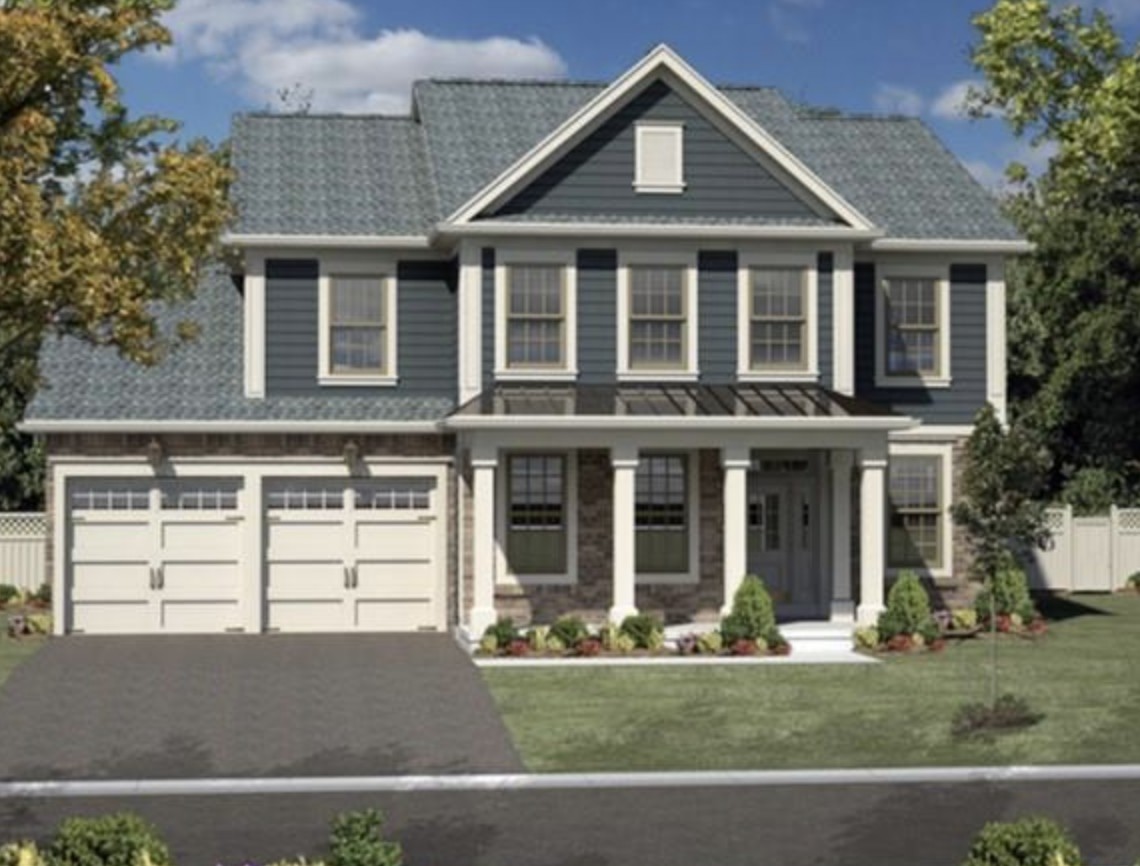
Buying New Construction in West Hartford:
What a $900K+ Budget Gets You and What to Verify Before You Sign

Quick Answer
- Confirm the builder's Connecticut registration before you sign. The Department of Consumer Protection says anyone who builds a new home must hold a valid certificate of registration, must give you a copy and a written notice before you sign, and must include the registration number in new-home advertising. Verify it on the state's eLicense system.
- Do not count on the state guaranty fund as your safety net. It pays up to $50,000 and only after you win an arbitration award or court judgment against a builder who cannot pay, so vetting the builder and reading the warranty matter more.
- Plan for taxes in year one. One Connecticut assessor describes a prorated second bill for new construction, covering the house from the certificate of occupancy date through September 30. At West Hartford's 46.77 mill rate, a $949,900 home carries about $31,099 a year in property tax if it is assessed at its price.
- Get independent inspections and an attorney's review. New does not mean defect-free, and Connecticut's seller condition report does not apply to newly constructed homes covered by an implied warranty.
New construction appeals to buyers who do not want to inherit someone else's roof, boiler or wiring. A new house has modern systems, current building-code construction and finishes chosen by the builder or by you. For many $900,000-plus buyers, particularly relocation buyers who cannot spend a year on renovations, it is the lowest-maintenance way to buy in West Hartford.
It is also a different transaction from buying a resale. You may be signing a contract for a house that is not finished, choosing options against a budget, relying on a builder's reputation, and closing on a home no one has lived in. The usual protections, such as a seller's disclosure and years of owner history, work differently or are absent.
This guide covers what to verify about the builder, what to read in the contract, how to inspect a home that looks perfect, and how new construction affects your carrying costs and tax bill in West Hartford.
How Buying New Differs From Buying a Resale
| Topic | What changes with a new build |
|---|---|
| Builder registration | The builder must be registered with Connecticut's Department of Consumer Protection and must give you the registration certificate before you sign |
| Seller disclosure | Connecticut's residential condition report exempts transfers of newly constructed property for which an implied warranty is provided under Chapter 827 of the General Statutes |
| Warranty | The contract and Connecticut law define what is covered, so have an attorney review the terms |
| Inspection | You still need independent inspections, ideally at stages of construction and again before closing |
| Lead-based paint rules | The federal disclosure rule applies to homes built before 1978, so it does not apply to a new home |
| Property tax | The first year can include a prorated second bill based on the certificate of occupancy date |
| Price | The final cost depends on the base price, allowances, upgrades and change orders, not only the list price |
Vet the Builder Before You Fall for the House
A model or rendering shows a finished product, but a contract is a promise by a specific company. Connecticut requires that company to register, and the registration gives you a paper trail.
- Ask for the registration certificate before you sign. The Department of Consumer Protection says builders must give you a copy, along with a written notice in 10-point bold type, before you sign a contract.
- Check the registration number. It must appear in all new-home advertising. Verify the registration and its status on the state's eLicense system, which the Department recommends for checking registrations before you hire anyone.
- Know what counts as a new home. Under the Department's guidance, a new home is a new single-family dwelling, a new two-family unit or a new condominium unit.
- Visit finished homes and talk to owners. Ask to see completed work, and ask owners how the builder handled problems after closing.
- Confirm permits and the certificate of occupancy. Building officials cannot issue permits to a builder without a copy of the registration certificate, and Connecticut's disclosure statute advises buyers to confirm with the municipal building official that permits and certificates of occupancy have been issued.
A registered builder is not necessarily a good builder, so treat registration as the minimum. The Department's page says violators can face suspension or revocation of registration and civil fines, which is why the certificate and number are worth checking.
What the Guaranty Fund Does and Does Not Do
Connecticut maintains a New Home Construction Guaranty Fund, and buyers sometimes assume it works like insurance. According to the Department's page, which is marked archived, the fund can reimburse up to $50,000, and only if you already hold an arbitration decision or court judgment, the builder cannot pay and is effectively judgment-proof, and the builder was registered within two years before you signed your contract. You must apply in writing within two years of the judgment date.
In practice, that means a long process before any reimbursement, for a capped amount. It is a last resort, which makes your choice of builder, your contract language and your inspections the real protection.
Read the Contract Like a Buyer Who Will Live With It
Have a Connecticut real estate attorney review the contract before you sign, and ask specific questions about each of these items.
- Base price and what it includes. Ask for the plans and written specifications attached to the contract, so finishes, appliances and systems are defined.
- Allowances. Flooring, lighting, tile and cabinetry are often priced as allowances, and choosing above them raises the final cost.
- Upgrades and change orders. Ask how changes are priced, documented and approved, and whether they affect the completion date.
- Deposits. Ask how deposits are held, when they are released and what happens to them if the project stalls.
- Completion and delay terms. Understand the estimated completion date and what remedies you have if it slips, particularly if you must sell another home or end a lease.
- Warranty terms. Ask what is covered, for how long, who performs repairs and how to submit a claim. Connecticut's Chapter 827 provides implied warranties on newly constructed homes, and your attorney can explain how they interact with the contract.
- Financing and appraisal. A new home can appraise differently from its price, so ask how an appraisal shortfall would be handled.
Inspect a Home That Looks Perfect
New homes can have framing mistakes, missing insulation, drainage problems and incomplete systems hidden behind clean drywall. The cheapest time to find them is before they are covered.
- Inspect at stages if the builder allows it. Before the foundation is backfilled, after framing and before insulation and drywall, and before closing.
- Hire an independent, licensed inspector. Connecticut requires home inspectors to be licensed by the Department of Consumer Protection. Hire your own, not one recommended only by the builder.
- Test for radon. The EPA recommends fixing a home at 4 pCi/L or higher, and the Connecticut Department of Public Health says a short-term test takes 2 to 7 days. Radon comes from soil, so a new home can have it too.
- Walk the home before closing with a written punch list. Record every unfinished or damaged item and agree in writing how and when it will be fixed.
- Collect the paperwork at closing. Certificate of occupancy, warranty documents, manuals, permit sign-offs and contact information for the builder's service department.
Our inspection guide for older colonials explains how to find and use specialists, and much of that advice, including radon and sewer-line checks, applies to new homes as well.
What a New Build Costs to Carry
The table assumes a 20% down payment, a 30-year fixed rate of 7.40% (Freddie Mac's national average on October 15, 2026), and West Hartford's 46.77 mill rate applied to an assessment of 70% of the purchase price. A new home's actual assessment may differ from its price, so treat the tax as an estimate. The middle and upper loans exceed the $832,750 conforming limit, so lenders price them as jumbo loans.
| Purchase price | Loan (80%) | Principal and interest | Estimated annual tax | Tax per month |
|---|---|---|---|---|
| $949,900 | $759,920 | $5,262 | $31,099 | $2,592 |
| $1,250,000 | $1,000,000 | $6,924 | $40,924 | $3,410 |
| $1,595,700 | $1,276,560 | $8,839 | $52,242 | $4,353 |
Excludes insurance, utilities and maintenance. Jumbo rates differ from the national average; see our jumbo mortgage guide. Source: Freddie Mac Primary Mortgage Market Survey, October 15, 2026; Town of West Hartford mill rate.
The first year can also include a second tax bill. The Town of Guilford's assessor, describing Connecticut General Statutes Section 12-53a, says new construction completed after the October 1 assessment date is assessed for the part of the year from the certificate of occupancy date through September 30, and the owner generally receives two bills that year. The prorated bill is due 30 days after it is issued, and most banks do not escrow it. Ask West Hartford's assessor and your lender how this works for the home you are buying, and budget for the bill.
West Hartford is also in a townwide revaluation, with assessments set as of October 1, 2026, notices in November 2026, and the first affected bill due July 1, 2027. Ask your agent to model your taxes under the new assessment. Our property tax guide explains the 46.77 mill rate.
How New Construction Fits the West Hartford Market
Redfin reports that West Hartford homes sold in a median of 14 days at 110.2% of list price in the three months ending July 2026, with 79.0% selling above list. Those figures are townwide and mostly reflect resale homes, and new construction can follow a different pricing and timing pattern. Compare any new build with closed sales of similar new and recently built homes, not only with older houses nearby, and ask the builder for its recent closed prices.
If you are choosing between new construction and a resale, our bidding-war guide explains how to compete for resale homes, which is useful context for deciding whether to buy a finished house now or contract for one that is not built yet.
Mistakes Buyers Make With New Construction
- Trusting the rendering. A rendering is a sales image, not a specification. Insist on plans and written specs.
- Skipping the registration check. It takes minutes, and the builder must provide the certificate anyway.
- Underestimating options. Allowances, upgrades and change orders can add materially to the base price.
- Waiving inspections because the home is new. Hidden construction problems are the point of inspecting.
- Ignoring the first-year tax bills. A prorated second bill can arrive after you have budgeted for a normal year.
The Bottom Line
New construction can be an excellent way to buy in West Hartford, with modern systems and fewer immediate repairs, as long as the builder is registered, the contract defines what you are buying, and the home is inspected as it is built.
Do not rely on the state guaranty fund, budget for the first-year tax bills, and have an attorney review the warranty and deposit terms before you sign.
Considering a new build in West Hartford? I can help you compare new construction with resale homes, review what is included in a builder's price, line up inspections and an attorney, and estimate your carrying costs including the first-year tax bills.
Does a builder have to be registered in Connecticut?
Yes. The Department of Consumer Protection says anyone who builds a new home needs a valid certificate of registration. The builder must give you a copy and a written notice before you sign, and the registration number must appear in new-home advertising. Verify the registration on the state's eLicense system.
What does Connecticut's New Home Construction Guaranty Fund cover?
According to the Department of Consumer Protection's page, which is marked archived, it can reimburse up to $50,000, and only after you have an arbitration decision or court judgment and the builder cannot pay. The builder must also have been registered within two years before you signed your contract, and you must apply within two years of the judgment.
Does a new home in Connecticut come with a warranty?
Connecticut's General Statutes refer to implied warranties for newly constructed homes under Chapter 827, and builders usually provide written warranty terms in the contract. Have a Connecticut real estate attorney review what is covered, for how long and how claims are made before you sign.
Will I get two property tax bills on a new construction home?
Possibly in the first year. A Connecticut assessor describes prorating new construction completed after the October 1 assessment date from the certificate of occupancy date through September 30, which generally produces a second bill that year. Confirm the process with West Hartford's assessor and ask your lender whether it escrows the prorated bill.
Do I still need a home inspection on new construction?
Yes. New homes can have construction defects, drainage problems or incomplete systems, and radon can be present in any home. Hire a Connecticut-licensed inspector, inspect at stages if the builder allows it, test for radon and walk the home with a written punch list before closing.
Sources: Connecticut Department of Consumer Protection, New Home Construction Registration FAQ; Connecticut Department of Consumer Protection, New Home Construction Guaranty Fund (archived page); Connecticut Department of Consumer Protection, consumer guidance; Connecticut General Statutes, Chapter 392 (Section 20-327b); Town of Guilford Assessor, how new construction is prorated; U.S. EPA, radon; Connecticut Department of Public Health, Radon Program; Connecticut Department of Consumer Protection, Home Inspector; Redfin (three months ending July 2026); Freddie Mac Primary Mortgage Market Survey (October 15, 2026); Town of West Hartford Tax Office; Vision Government Solutions. Laws, fees and procedures change; confirm with the relevant agency and your attorney. Peter Tumbas is a real estate agent, not an attorney, inspector or builder.